Why the standard answer fails
Ask around and you will hear the same number: deep clean your home twice a year, spring and fall. It is a fine starting point and a poor rule, because it describes a calendar rather than a house. Two households on the same street, in identical buildings, can need wildly different schedules — one with three kids and a shedding dog, the other a couple who travel for work and cook twice a week.
A better approach is to stop counting months and start reading the house. Build-up leaves evidence, and the evidence appears in the same six places in almost every home. Learning to check them takes about ninety seconds and will tell you more than any general guideline.
Six signals from the house itself

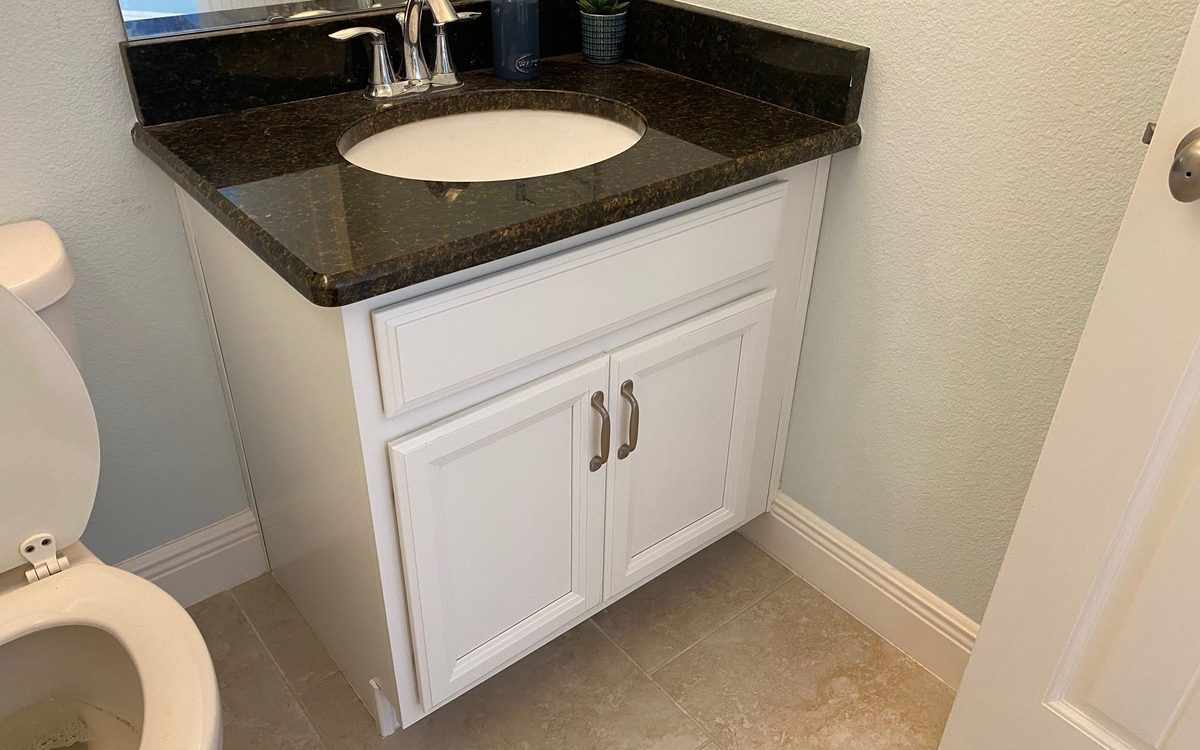
The first is grout. Pick a spot of bathroom floor grout under the vanity, where feet rarely land, and compare it to the grout in the middle of the room. If those two are noticeably different colours, the middle of the room has been accumulating for a while.
The second is the shower glass. Run a fingernail lightly across a panel. If you can feel texture rather than glass, that is mineral scale and soap residue bonded to the surface. Left long enough it etches the glass permanently, and at that point cleaning stops helping.
Third: the top of the kitchen cabinets, or the top of the refrigerator if the cabinets run to the ceiling. Grease vapour from cooking rises, cools and settles there, then catches dust. The result is a sticky grey layer that a cloth alone will not lift.
Fourth: the return air vent. If the grille has a visible fur of dust between the fins, your HVAC system has been moving more particulate than the filters are catching, which means it is depositing that particulate around the whole house.
Fifth: baseboards, specifically behind furniture. Baseboards in open traffic get bumped and wiped incidentally. The ones behind a sofa do not, and they show the true accumulation rate for the room.
Sixth, and the one people find most convincing: the range hood filter. Pull it out. If it does not come out easily or you cannot remember the last time it did, the answer to how often you need a deep clean is probably "soon".
If more than two of those six surprise you, the house is past due — regardless of what the calendar says.
How your household changes the math
Certain factors reliably compress the interval. Pets are the largest: dander and hair migrate into fabric, along baseboards and into vents at a rate that no weekly vacuum fully offsets. Two shedding animals can turn an annual schedule into a quarterly one on their own.
Cooking frequency is second, and specifically frying and high-heat cooking. Aerosolised oil settles across the entire kitchen and the rooms adjacent to it, and it binds dust to whatever it lands on. A household that cooks most nights generates several times the kitchen build-up of one that reheats and orders in.
Occupancy is third. More people means more textiles, more shoes through the door, more shower use and more airborne skin cells, which is the primary constituent of household dust in most homes.
Then there are the specific cases: wood heat, which is common enough in Rensselaer County and puts fine ash into circulation; smoking indoors, which deposits a film on every surface including ceilings; allergies or asthma in the household, where the threshold should be lower than comfort alone would suggest; and a home office, which quietly doubles the hours a room is occupied.
A rough starting grid
As a starting point rather than a rule: a single occupant in a small apartment with no pets can often go twelve to eighteen months between deep cleans. A couple with one pet, cooking regularly, sits closer to every six to eight months. A family of four or more with pets is usually every three to four months, and the interval shortens further if anyone in the house has respiratory sensitivities.
The Capital Region seasonal factor
Upstate winters add a variable that milder climates do not have. From November to March, windows stay closed, heating systems run continuously, and everything that comes through the door — road salt, sand, wet grit — stays inside. Air exchange drops to almost nothing at the same moment that particulate load rises.
That combination is why so many homes here feel dramatically better after an early-spring deep clean than the same clean would deliver in July. If you only do one a year, late March through April is the highest-value window in this climate.
The second-best window is late fall, before the house closes up. Going into a five-month sealed period with clean vents, clean filters and clean floors makes a measurable difference to how the air feels in February.
What a deep clean does not fix

Being honest about the limits saves disappointment. Cleaning does not repair. Grout that has cracked, gone soft or absorbed staining through its full depth needs regrouting and sealing, not scrubbing. Shower glass that is already etched by years of mineral deposits will improve but not return to clear.
Hardwood with worn-through finish will look better clean, and it will still be worn through. Silicone caulk that has grown mould inside the bead cannot be cleaned back to white — it is replaced, which is a twenty-minute job and a permanent fix.
A good cleaner tells you which category you are in. If someone promises a deep clean will restore something that has physically failed, treat that as information about the company rather than about the surface.
Building a schedule you will keep
The most practical arrangement we see is a recurring plan doing the maintenance, plus one deep clean a year timed to early spring. The recurring visits stop anything from reaching the six signals above, and the annual reset handles the slow accumulation that even weekly attention does not reach.
If recurring service is not in the budget, the alternative that works is two deep cleans a year with a written list of what you will handle in between — realistically, kitchen and bathrooms weekly, floors weekly, and one rotating detail item a month. Written down, that list gets done. Held in your head, it does not.
And if you are still unsure, use the grout test. It is the single most reliable indicator in the house, it takes ten seconds, and it has never once been wrong in a home we have walked through.
Questions readers ask
Yes, though less often. Weekly cleaning maintains the surfaces you interact with; deep cleaning reaches inside, behind, above and underneath. A well-maintained home may only need an annual reset, but the build-up in grout, vents and high surfaces still accumulates on its own schedule.
In this climate, late March through April. The house has been sealed since November, the heating system has been circulating continuously, and winter grit has been tracked in for five months. A spring reset delivers the largest visible difference of any month you could choose.
Absolutely, if you have the time and are willing to work in the right order. Budget a full weekend for a three-bedroom home, work top to bottom, and give products actual dwell time instead of scrubbing immediately. The most common self-deep-clean mistake is rushing the chemistry.